Background
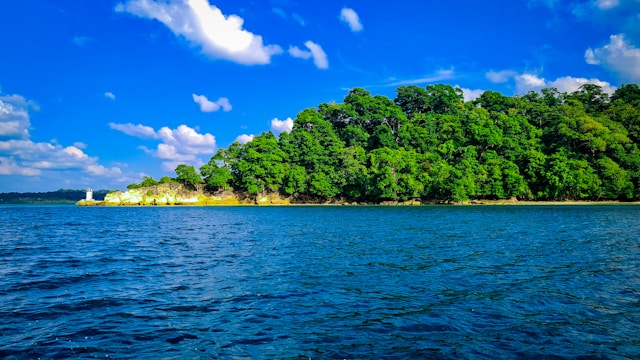
The Andaman and Nicobar Islands (ANI) constitute an island group recognized for its rich floral diversity and a high rate of endemism [1]. This significant biodiversity is attributed to the geographical isolation of these islands [1]. The region encompasses diverse ecosystems, notably including extensive mangrove forests [2, 6].
Mangrove forests are biologically significant natural systems that exist at the interface of terrestrial and marine environments [2, 6]. They are crucial for maintaining the health and productivity of coastal ecosystems globally [6]. The Andaman Sea, which surrounds the ANI, exhibits dynamic oceanographic patterns, including distinct wind regimes and significant water transport across its straits [5].
The ecological context of forest areas, generally, is also relevant to human health. Forests can provide conditions conducive to the transmission of certain diseases, such as malaria, due to factors like vegetation cover, temperature, rainfall, and humidity that favor vector survival [3].
Key findings
- Strong evidence shows that the Andaman and Nicobar Islands possess rich floral diversity and a high rate of endemism, largely due to the isolation of the island group [1]. Several floral species within these islands have yet to be formally reported [1].
- A recent study reported the first recorded instance of the small flowering plant *Rhynchoglossum obliquum* Blume in the Andaman and Nicobar Islands [1]. This specimen, belonging to the family Gesneriaceae, a genus previously unknown from these islands, was collected from a Limestone Cave area in Nayadera Village, Baratang Island [1].
- Strong evidence shows that mangrove forests are among the most diverse and biologically significant natural systems globally, playing critical roles in maintaining the health and productivity of coastal ecosystems [6]. They provide multiple services and functions, including habitat for local fauna and flora, sources of food and other goods, carbon sequestration, and protection against natural disasters such as storm surges and coastal erosion [6].
- Microorganisms are an important component of the mangrove environment, contributing critically to its creation and maintenance [2]. They play essential roles in the decomposition and mineralization of leaf litter, which contributes to the productivity of the mangrove ecosystem [2]. Microbes also recycle nutrients, produce and consume gases that influence global climate, destroy pollutants, treat anthropogenic wastes, and can be utilized for biological control of plant and animal pests [2].
- Several studies report that mangroves face various threats, including coastal development and expansion, which have led to a gradual depletion of mangrove areas worldwide [6].
- An ecological niche modeling (ENM) study suggests that under current climate scenarios, the Andaman and Nicobar Islands are at high risk of invasion by the Giant African Snail (*Achatina fulica*) [4]. This species is considered one of the world's 100 worst invasive alien species [4]. Introduced to India in 1847, it has since spread across the country, impacting native biodiversity and agricultural/horticultural crops by feeding on more than fifty species of native plants and crops and outcompeting native snails [4].
- Several studies report that forests are significant sites for malaria transmission, providing conditions such as vegetation cover, temperature, rainfall, and humidity that are conducive to the distribution and survival of malaria vectors [3]. Approximately half of the global population at risk of malaria resides in forest areas [3]. The Asian-Pacific region, which includes the Andaman and Nicobar Islands, exhibits a high diversity of malaria vector species, along with species complexes and behavioral plasticity among these vectors, contributing to the entomological complexity of malaria transmission [7].
- Observational data shows that the Andaman Sea experiences stronger South-westerly winds from May to September and relatively weaker North-easterly winds from November to February [5]. A strong negative Ekman pumping (the upward movement of water in response to wind stress) is observed along the north coast of Indonesia during Summer [5].
- The transport of water across the straits of the Andaman and Nicobar Islands (ANI) has been computed, showing it is in phase with the monthly averaged Mean Sea Level Anomalies (MSLA) of the Andaman Sea [5]. High surface outflux occurs through the Great Channel and Ten-Degree Channel in Summer, with the rate of transport through these straits reaching a maximum in April and October [5].
Methods
The information presented draws from various research methodologies. The documentation of new floral species in the Andaman and Nicobar Islands involved specimen collection and taxonomic description [1]. Insights into mangrove functions and threats were derived from the analysis of current and historical literature and data [6]. The assessment of invasion risk by the Giant African Snail employed ecological niche modeling (ENM) to project distribution patterns under different climate scenarios [4]. Understanding malaria transmission in forest areas and the Asian-Pacific region is based on summaries of existing knowledge regarding dominant vector species and environmental factors [3, 7]. Information on the Andaman Sea circulation and variability was obtained through analysis of oceanographic observations [5].
Interpretation
The forests of the Andaman and Nicobar Islands are ecologically significant, primarily due to their rich floral diversity and high levels of endemism, a characteristic fostered by the islands' geographical isolation [1]. The continued discovery of new species, such as *Rhynchoglossum obliquum*, underscores the islands' status as a biodiversity hotspot and highlights the ongoing need for ecological exploration [1].
Mangrove ecosystems within the Andaman and Nicobar Islands are vital components of the coastal environment, providing essential ecological services including habitat provision, carbon sequestration, and protection against natural coastal hazards [6]. The crucial role of microbial communities in nutrient cycling and overall productivity further emphasizes the complexity and importance of these unique forest types [2]. However, these critical ecosystems are vulnerable to anthropogenic pressures such as coastal development [6].
The ecological balance of the Andaman and Nicobar Islands is also threatened by invasive alien species. The high risk of invasion by the Giant African Snail, as indicated by ecological niche modeling, poses a significant threat to both native biodiversity and agricultural systems [4].
Furthermore, the forest environments of the Andaman and Nicobar Islands, consistent with other tropical forest regions, create conditions that can facilitate the transmission of vector-borne diseases like malaria [3, 7]. The complex interplay of environmental factors and diverse vector species in the Asian-Pacific region contributes to this public health challenge [3, 7].
The surrounding marine environment, characterized by specific wind patterns and significant water transport through straits, plays an integral role in shaping the coastal and broader ecological dynamics of the Andaman and Nicobar Islands [5].
Limitations
The supplied sources provide specific examples of ecological importance, such as the discovery of a new plant species [1] and general functions of mangroves [2, 6], but do not offer a comprehensive, integrated assessment of the ecological importance of all forest types across the entirety of the Andaman and Nicobar Islands. The report on *Rhynchoglossum obliquum* represents a single new genus record, suggesting that while the islands are biodiverse, a complete inventory is still in progress [1]. The assessment of the Giant African Snail's invasion risk is based on ecological niche modeling, which provides projections under specific climate scenarios [4]. General statements about malaria transmission in forest areas [3, 7] and mangrove ecosystem services [6] are broadly applicable but may not capture all unique ecological nuances specific to the Andaman and Nicobar Islands without further localized studies.
What's next
Continued efforts are necessary for documenting the floral diversity of the Andaman and Nicobar Islands, given that several floral species have yet to be reported [1]. Effective management practices are required to address the threats to mangrove ecosystems, particularly those arising from coastal development and expansion [6]. For areas identified as high-risk, such as the Andaman and Nicobar Islands, monitoring and implementing management strategies for invasive alien species like the Giant African Snail are crucial to mitigate their impact on native biodiversity and agriculture [4]. Further understanding of malaria transmission dynamics in the complex entomological landscape of the Asian-Pacific region's forest areas is important for developing effective vector control strategies [3, 7].